

Silver, Copper, and Industrial Metals: What Relative Strength Can Reveal
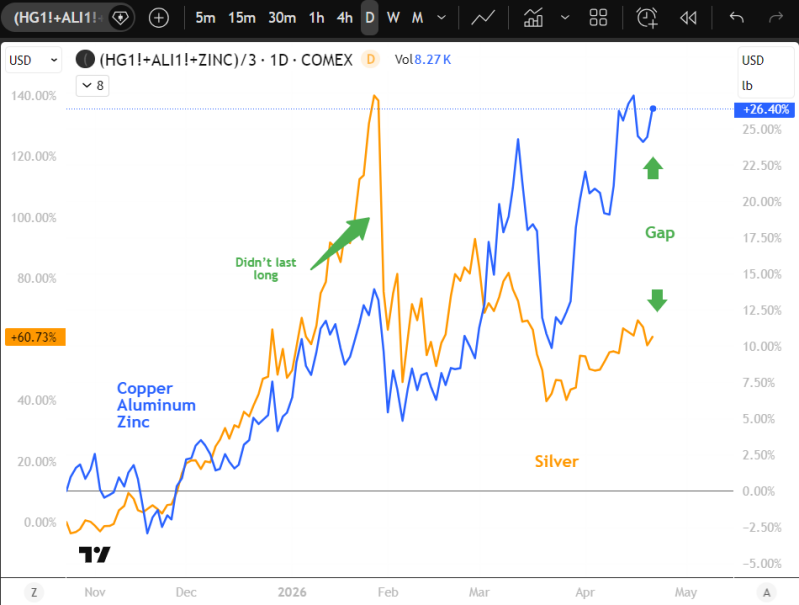
Silver sits between two worlds: precious metal and industrial metal. That makes it one of the more interesting assets to compare with growth sensitive metals such as copper, aluminum, and zinc.
When these markets move together, the message is usually clear. When they diverge, the signal often becomes more valuable.
Step One: Silver vs Copper
Copper is often seen as a barometer for economic momentum. Its link to construction, manufacturing, and infrastructure gives it a reputation for reflecting growth expectations.
Silver is influenced by many of the same forces, which is why the two often track each other over time.
When copper pushes higher while silver stalls, the market may be showing:
- Silver lagging behind
- Copper moving too far too fast
- A temporary disconnect that later closes

Step Two: Silver vs the Broader Industrial Complex
Looking beyond copper can strengthen the signal.
If copper, aluminum, and zinc are all moving higher together, that suggests broader industrial demand rather than strength in one isolated market.
If silver still fails to participate, the divergence becomes harder to ignore.
That can point to:
- Delayed strength in silver
- Rotation away from precious exposure
- A broader move that still lacks full confirmation
Why This Matters
Markets often become most informative when connected assets stop telling the same story.
Those moments can reveal:
- Hidden weakness
- Delayed strength
- Leadership shifts
- Repricing ahead
What to Watch Next
The gap itself is only the setup. The real signal comes from the resolution.
- Does silver catch up?
- Do industrial metals cool off?
- Does the whole group realign?
How that divergence closes often matters more than the divergence itself.
Core Takeaway
Price shows movement.
Relative strength between connected markets often shows meaning.
Follow on
𝕏
for real-time market context